
What a joy this was – a journey through a working life, but so much more. At the start of his career outlined here, Burrows was working on TV shows that, though huge in America, meant little to me. In the midpoint and right through his career, though, he was in everyone’s house every week. Friends, Cheers, Frasier, those three alone got him into the nation’s hearts and psyche. There were lots of secrets told, and some things we thought we knew that he confirmed or denied. The best thing to come from this book was the way it sent me to various channels, tracking down scenes from the past, snatches of laughter, and the bitter-sweet first notes of a theme tune, conjuring up scenes and sounds long gone, ever present.

I’m a huge fan of Sophie Hannah’s Poirot books, and you know the Christie estate doesn’t introduce a writer to the famous Belgian lightly. This is one of her contemporary thrillers, and although I enjoyed it and it kept me highly entertained, it won’t be my cup of tea – my tissane – again.

What a complex delight this was. Like all good books, it sent me off down paths and shady walks in search of the inspiration the writer mentions – Paradise Lost, for one, plus images and writing about gardens from all over the time of gardens. Laing meets neighbours and locals who knew the garden when it was first made, and in various iterations since. There’s a delightful description of an “Open Garden” event she throws, when the visitors bring stories of the garden. She doesn’t shy away from the negative aspects of this and all gardens: Enclosure, colonialism, slavery, dominion over humans and nature. It is nature, in Laing’s hands, that delivers solace and peace.

Another Covid-19 book. How odd. I don’t plan my reading, though one book often suggests the next, but this slim volume came from a charity shop and filled a gap between something life-changing (above) and a request from the local library.
The characters are classic Bennett. Older people, slightly sly, frequently fey, and with rich pasts. I think he spent too much time with one character who ended up being shipped out of the home where the novella is set, but it has the usual Bennett charm, and a victory for art and love.

I’ve long followed Lyn Slater on Instagram, where her account (originally set on the streets of NYC) provided great visual joy and energy. This book traces her journey from professor to retiree, starting in the early days of social media, becoming a star, invited to all the right places, with gifts, travel, and acclaim. There’s a lockdown here too, and a re-evaluation. This might have been called How to Be, instead of How to Be Old, since her age is only tangentially related to the arc of the story. Though she might claim that only when we’re old can we look back along that arc and see what really matters. It was charming and inspiring and beautiful, and I’ve revisited her on Instagram for more rural images and pleasure.

When I went into the library to check on my order and this popped up on the list, the librarians swooped. Some had read it, some were waiting to read it, everyone had heard about it, and everyone had an opinion. It isn’t like me to read a new and interesting book within about 5 years of it being new and interesting, so I felt good about my choice.
Initially, I thought it was going to be a road-trip book, and I settled in because there’s nothing I love more than a road-trip book or movie, or an actual trip. The crucial thing though is that the protagonist doesn’t drive on. She doesn’t go anywhere, and she doesn’t really do the crucial thing she’s wanting to do throughout the novel.
I can understand some of the reasons for the notoriety, and I wonder if the reason it didn’t hit the spot for me was that it reminded me (in the impact, as much as the theme) of reading Erica Jong, back in the day. That sense of something being articulated which you hadn’t seen described before, but had always known was there. Perhaps it is that, for a new generation of readers. I enjoyed the read, the insightful language makes the mundane seem fresh. And the bathroom tiles will haunt me for a long time.
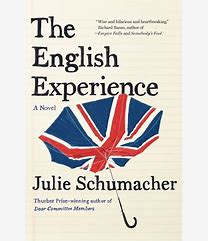
The final part of a trilogy, though it stands alone. If you’ve been a student or a professor and have ever been on a field trip, you’d enjoy it, I think. The ending was a slight let-down, but the novel is charming with a hapless, bumbling hero and unexpected depths in the student body. Funny, poignant, insightful.

Another library order, and I don’t know what generated the order – perhaps the Laing book referred to it and sent me here? It comes from Australia, where free fruit growing on neighbourhood trees and lush vegetation are possibly more available. Full of good ideas though for spending less (money, resources, time) and making space to enjoy the good things in life, which generally are cheap and priceless, if you know where to look.

Ooh I do love Lipman. She’s bright and sunny and kind, with a dark corner in every room. Her books are small stories, like a modern, liberated Barbara Pym. Though her heroines usually end up in a marital bed, not the back bedroom of a damp vicarage. Lipman explores the characters of small towns, peeling back the layers of history and family fable to get to the heart of things. This new one isn’t entirely vintage Lipman, (though the heroine does work in the estate-sale business) but it is full of laughs and conjures rooms into which you’d walk, lunch spots in which you’d happily while away an afternoon. If you haven’t already discovered Lipman, I highly recommend her brand of balm for troubled times.

Petroc presents on BBC Radio 3 and you can hear his voice any time you like. This is his story, and it is complex and moving. He’s encouraged to doubt that even his childhood home and stereotypical Cornish name qualify him as a Cornishman, so this is a trip into painful territory. His descriptions of his parents and their lives are very tender – his life is tragic in an ordinary way. He travels and length and breadth of the county, but starts his journey and puts his focus on his childhood home. He grew up on the Lizard, a remote and very particular part of a fascinating place. I learned a lot about Cornwall, a county I thought I knew quite well. I highly recommend this if you like any kind of history: natural, industrial, human.

A small, haunting, remarkable book. Very short, but containing multitudes. It started plainly enough – a sea traffic controller in France gave bad information to the occupants of a small boat crossing the Channel. Almost all of them drowned. This much is true. This happened. Gradually, the writer turns the story, which is simply told: the woman, her interrogator, and the fatal phone call. The narrative becomes a mirror, held up to reflect the reader. After finishing it, I returned again and again to the final pages, not wanting to accept the truth, couched in the plain, elegant writing. If you can’t bear the whole book, just read the final page.
 Suzy D Harris