Reading Light

Bringing the year to an end with some comforting reading and some challenges.

This was a cosy treat – quite a predictable story of a well-educated young man getting lots of chances (and being brave and confident enough to take them) and making his mark. Funny and frank and a great insight into a period in British television I can well remember. Who knew the writer of the hugely popular “Yes Minister” began his writing life “On the Buses”? I’m not sure it provides much of a primer for writers starting out, the world of media and entertainment is so changed, but he’s engaging company for a couple of hours.

I’m fated never to read big books at the time they’re big – mostly because there’s too much on my book pile so I feel I can’t chase the shiny new thing. This results in me looking blank when everyone’s raving about the latest hit, and then months – years – later, kicking myself mentally for wasting all this time. And time spent without Queenie in your life IS time wasted. She’s gorgeous and funny, tragic and resilient. Anyone who’s been a young woman living in a city will identify with some of her experiences, though her story is unique and specific. Very funny, warm and moving.

A cool slim book filled with cool slim characters. Reading in translation adds another level of separation but this lovely book grips and moves. It is harder to identify with the reluctant reader of the story when you don’t know the books she’s discovering, but the challenge and succour of reading is universal, as are friends, families, longing and loss.

Hughes’ kitchen was already full of dogs and short-term rescues when she finds a tiny bird, thrown from the high nest. Through study and painful experiment she is able to raise George the magpie. He irritates her partner and teases her dogs by hiding food out of their reach, and Hughes is very clear about the wrenching guilt of raising (and domesticating) a wild animal. She knows he must go, though for a while he returns for food and comfort. This book is full of painful, beautiful writing about the household and garden and about wild things interacting with humans. There are tiny tantalising glimpses of Hughes’ parents (Ted and Sylvia) but it is George who is the star here, illuminated by his foster-mother’s patience and clarity. 

This is the recently republished first Moomin book and if you’re a fan* of the lugubrious Moomintrolls and their dark forest world you’ll be interested to see the origin story. Published in 1945 the themes of separation and loss are close to the surface but you see the outlines of the charming friends you’re going to find in the later books. *I am.

This is the wintery version of Uncle Paul. Scary, with the itchy claustrophobic quality of a house full of unwanted guests, which is the nightmarish scenario of the novel. Fremlin captures the complications of grief very well, and she’s incredibly detailed about families. She pulls a fast one, too. You won’t see it coming.

I romped through this book at the end of the year. Orlean works so hard and makes it feel so easy, so simple. She leads us on a journey from childhood visits to the library where she reminds us of our first experiences of freedom and choice. I have such fond memories of the library, stretching to watch the librarian’s fingers flickety-flick through the narrow drawers of cards, the little cardboard envelope bulging with the book cards. What a day it was when I moved from the beige envelope of the children’s department to the deep mature turquoise of adult.

Using the lens of the 1986 fire which badly damaged the beautiful 1920s building, Orlean gives us a history of the array of colourful characters (many of them women) who brought the library service to Los Angeles, (later than in most major American cities.)

The fire might have been arson, or it might have been a result of woeful maintenance failings and corridors as filled with piles of books and papers as the average reader’s bedside area. There might, therefore, have been a culprit, and someone was interviewed for the crime but there was simply no evidence to hold him. His story weaves through the history of the library and the development of its services. Harry Peak was handsome and troubled, he worked on the outside fringes of the film business and was constantly on the verge of his big break – or so he told everyone. Orlean shows us a person trying to be a character, trying out different roles and scripts constantly. Everyone talks about his charm, and his inability to stick to one story and he wouldn’t be the only member of LA’s demi-monde who depended on the library for shelter.

The descriptions of the library are gorgeous and will send you to the internet for a virtual tour. Restocking the library after the fire brought out the best in everyone, and the whole story is filled with hope and joy.

I’m going to end with some lines from the book (in case someone from the local council might be reading.)

“…how necessary and how full of hope it is to collect these books and manuscripts and preserve them. It declares that all these stories matter, and so does every effort to create something that connects us to one another, and to our past, and to what is still to come.”

Brrr…ing me more books

Two months of reading in one post again, because I had a little blip and lost my mojo. Don’t worry, I found it again, under a pile of books.

This was bowling along very nicely – lots of period detail, great heroine and a fascinating time in English history, plus some interesting BBC history too. About halfway through I began to feel it was a bit…something. I had a long think. Cool, is what I decided I meant. It was a cool read, a reserved and private experience. Then I noticed the title on the front cover (am I alone in forgetting the title of a book while I’m reading it? Rather like forgetting someone’s name while you’re still shaking their hand. Which I do.)

Transcription. The record of something but not the thing itself. Then the whole thing came into sharp focus. It is a web of stories, only the final pages revealing the thing of darkness hiding in the centre.

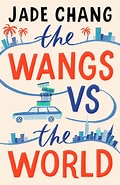
From one extreme to the other, this is a book of warmth and chaos. You’ll laugh, you’ll cry, especially in the closing moments. The Wangs are forced by crisis to spend much more time together than they’d wish, until they discover time together is running out. The book was written in 2016 (and doesn’t that now sound like 1939? A time before?) All the modern crises are there, and some new ones for me, reading about a family of Chinese Americans who are split – the older generation still rooted in the old country and the younger generation not just finding but building a new way of being. I really enjoyed spending time with the Wangs.

There followed a long pause in which I struggled to concentrate, got some work done, adjusted to my least favourite time of the year, and went to work. Then this happened:

If you haven’t heard of Fremlin, don’t worry. This book was published in 1959 but it returns to the light as fresh as a seaside morning. Part mystery novel, part family saga, and a huge sandcastle of scary scenes in the darkness. It was gripping, frightening, clever, deceptively simple. A proper tonic for when you’re struggling to read and want a book that is going to do all the work for you. Her dissection of a family is so crisp and cleanly done you’ll hardly notice until you’re looking into the entrails

My reading mojo was partially restored by Uncle Paul, but there’s no point pushing things is there? And I couldn’t be sure, when I started this, that it would work for me in my weakened state.

Hallett is a huge seller and writes twisty plots with lots of detail. It is the presentation that’s unique. The story unfolds through texts, What’s App messages, transcripts of interviews and phone calls, emails, official reports, and every form of communication except direct storytelling. I wondered at first if that would be at the expense of character, but no, Hallett is so good, the characters gradually emerge from the jumble of sources. Addictive and frictionless reading, and it felt so good to find something unputdownable for a few days.

I’ve enjoyed Cox’s writing before and this seemed like an obvious holiday read. What I loved about it was the accessibility of the nature he’s exploring. There’s a place for the more exotic tale, I know, but if you can’t take six months off and live in a shack on the beach in Chile in order to get closer to a small but famous vole, then a book about that vole can seem a little remote.

Cox writes about the nature anyone (in England) can find on a country walk. What makes it good reading is his facility for noticing, his humour, and his great humility. He assures us that the more you walk, the more you’ll fall down. Some other nature and travel writers give the impression they’ve never fallen over in the mud. Cox admits to getting lost, getting tired, considering getting a taxi home, and he’s very accurate about the sudden spooks that can come over you in a seemingly empty landscape. He writes very movingly about his family and his cats, and you’ll also laugh out loud.

He’s on instagram and substack if you want to see more of his work and his landscape. This book was published through Unbound and that’s another whole story in itself. A story of great hope and joy, worth a minute of your time.

I chose this book because I’d just been to the unveiling of a portrait of the late, great Fay Weldon. The portrait is fine, but the book is a better likeness. She’s right there in the first pages, leaning forward, puckish and twinkly. Weldon doesn’t hide herself in the characters, she’s quite clear they’ve no choice, she’s made the decisions and some are very sad but you’ve just got to get on with it.

The book is called Before the War but it really concerns a period After the War, the first one, when upper-class households lost their servants to the trenches, and ordinary men going about their day in the 1920s were carrying unimaginable memories. Many of the characters are unlikeable. Fortunately, Weldon is there with us to remind us they aren’t bad people, though they’ve done some bad things. Weldon’s cleverness and humanity keep the book alive, and she breathes it into the orphaned twins who are going to take the story forward into the next volume. Lots of beautiful period detail, very funny, and you’ll feel you’ve spent time with warm, wise Weldon.

Recumbent reading

Why is reading different on holiday? We have more time, yes, but there’s more to look at, new experiences, unconquered territory. And why should we read different things? The classic “beach read” is a glossy paperback, usually based somewhere exotic, and often sporting some sun-tanned flesh on the cover. It might be easy reading, but aren’t we better able to take on a challenge when we’re separated from the quotidian demands?

I didn’t plan my holiday reading, but it hasn’t been hard to see the patterns. I read this book which I suppose you’d categorise in “business” because the working from home dilemma looms large for me. It is the best of times, it is the worst of times. This book sensibly encourages those of us who can, to think about those who can’t (bin-men, brain surgeons.) How can we remain creative and connected? And how can we avoid building a two-tier society where those who have comfortable homes and jobs which support remote working move further from the largely low-paid service workers who bring us our comforts. I wasn’t expecting American writers to be so keen on collective action, in particular Trade Unions. The book is sparky and easy to read, provocative and thoughtful.

I read my first Mendelson book only a month or two ago and I’m a fan. She writes carefully about families, and the monsters she creates are believable. The first book I read had a dreadful mother, this is the turn of the father, a fading artist whose wife is keeping her growing success a secret. Add in unhappy grown-up children, all the partners and lovers and plenty of good food in an atmospheric location and you’ve got another bestselling winner.

I’ve had this book for ages but didn’t start reading it until I was going to the location of The Outrun, a field in Orkney. Much of the book is set in a version of London I also recognised, and the writer is very open about her struggles with alcohol and the impact it had on the people around her. She’s offered treatment and she takes it and she succeeds. There’s so much more though, and the return to Orkney forces her to examine her past, the mental illness that dogs her father, and her own hope for the future. It reminded me very much of lockdown life, perhaps the isolation of the Islands echoing the isolation of that time? Liptrot finds joy in nature; working in the fields of her family farm, handling the ancient stones as she rebuilds walls, and listening to bird song. We see the stories and inhabitants of Orkney through her steady gaze and the book is powerful and interesting. Liptrot never sets out to be a cliche of inspiration, and she fulfills the brief given to all writers – show, don’t tell.

This was jolly fun, a wartime romance and something deeper. The nasty Mrs Bird refuses to answer any question which contains a hint of unpleasantness. This includes, but is not limited to: sex, desire, loneliness, anger and the painful realities faced by the Home Front. Of course our plucky heroine steps in and begins writing back to the correspondents Mrs Bird ignores. Trouble ensues, bombs fall, loved ones perish, but, as we know, peace came.

This would never be described as a romance, but that’s exactly what it is. Two lonely men getting on together, and working on a project for the ages: vast, elaborate crop circles. They’re a charming if rather anti-social pair and the book describes a hot summer in the 1980s perfectly. There’s a hint of folklore, political commentary and the gentle pain of two voiceless characters trying to leave their mark on the world.

This writer is a renowned expert on Golden Age Fiction, regularly appearing on podcasts and broadcasts, a past winner of the CWA Diamond Dagger and currently president of the Detection Club. He’s written a number of books in two series (the Lake District and Liverpool books.) This was the first of his I’d read. I found it a slow start, and I got the central twist pretty early, but it speeded up and was pacy, full of good interesting detail and although Golden Age in style, the substance was ultra-modern in detail and depravity. Might need a long pause before I tackle the next one in this series, starring female detective, Rachel Savernake.

I probably wouldn’t have read this so soon after The Outrun, but there I was in a bookshop in Orkney, and there was the book. This one is set in Berlin and follows Liptrot’s search for love, or at least connection, togetherness. As in the earlier book, nature becomes her quest and she travels the city birdwatching in the most unusual places. She’s very frank about the issues facing the Tinder generation and at times the book is very moving. I’m not sure how well this stands up without having read The Outrun first, but I had done, and together they gave me a strong sense of a person coming into their own.

I ended the month where I began, on holiday but reading about work. In this case, the wretched, dangerous and undervalued work engaged in by millions of Americans. Bernie Sanders writes with flair and rage about how politics has failed – is failing – most people. Billionaires and millionaires aside, everyone’s struggling with poor healthcare, poor leadership and no hope. Sanders is as critical of his own party as he is the opposition, he’s clear it is the system itself and not individual politicians which needs to change (no-one escapes judgement but he’s fair.) He has great humanity and doesn’t despair. Like the first book in the month, he calls for collective action from the ground up, unionisation and a refusal to support the status quo.

Summer Breeze

Summer bumper issue, June and July, (like the big Bunty or Beano which you used to take on your holidays).

This is a collection of Mantel’s writing for London Review of Books. It is fascinating to see what she was working on in fiction reflected in her research and thinking. She’s greatly concerned with bodies – bodies undergoing torture, bodies losing their heads. Her own suffering body and early death seem to haunt the pages. Almost as touching as her clear precise writing are the reproductions of her notes to her editors, often containing apologies and reservations. Was there ever such a charming, quiet, self-effacing genius? What a loss.

Given Mortimer’s work as a comedian it ought to be funny, and there are several laugh-out-loud moments. The central characters are likeable and it burbles along quite nicely. One shortcoming was strange, though, given the highly distinctive voice of the writer in his other work. All the characters in this book speak with one voice, making it impossible to know who is talking in long passages of speech. Some of the plot points were too obvious but it is an enjoyable read.

This is a gorgeous pillowy, creamy delight of a book. A wild child in a crazy family, children surviving terrible parents, war, loss, love and the life-enhancing theatre in the garden of a fairy-tale house. This book has it all. Several reviewers (I only read the reviews after the book) made reference to Life after Life by Kate Atkinson, which I read earlier this year. I would say the novels were distant cousins, rather than sisters. They share some common ancestors but they’ve grown up to be different in their ambition and scope. I found this a thoroughly delightful reading experience.

If you are writing (or even if you are just reading) I think you’ll enjoy this book. Rebecca Lee covers the process of bringing an idea to a reader in the form of a book, and covers a lot of ground. The various stages managed by publishers, editors, printers, agents, writers and readers are explored and she has a friendly tone, dropping some trade secrets along with history and context.

Despite having an award-winning theatrical career David Harewood is reaching a wider, more general audience with his documentaries based around his own experiences. He’s explored slavery, and blackface on television. He’s spoken openly about his manic episodes and this is the story of those years, early in his career. He was sectioned, finally, after friends and family were unable to help him (and he was unable to ask for help.) On the surface his story is one of resounding success. Despite having no theatrical influences in his family, and with minimal help at school, he ended up where he needed to be, RADA. He excelled and his career got off to a flying start. Soon though the natural ups and downs of a career in acting, coupled with racism, thwarted expectations and recreational drugs blended into a terrible mix. Harewood talks openly and carefully about the racism he experienced as a child and a young man, and explores what impact that feeling of not belonging had on him. He lived in America for extended periods of time and found that a more balanced society. It seems he’s back now, and bringing his story, painful and peaceful in equal measure, into the light,

If you’re going to read this (and I strongly recommend it), don’t read the blurb, the preface, the introduction or any reviews. Except this one. You’ll want to get to know the hero on your own terms. First.

Pressburger (of Powell and Pressburger fame) brings his cinematic eye to the page. Post-war London is grimy and crowded, vivid characters pop up in small cameos and the central character is unflinchingly drawn. There’s a sinister undertone, a Pinteresque courtship with a nasty edge, and you’ll feel suitably conflicted and uncomfortable by the final page.

I saw Behr talk about this book at a recent Literary Festival. He seemed so vital, so full of spirit, it is chilling to read in the book how nearly he didn’t return from a regular run. He’s a brilliant journalist but somehow hadn’t computed that running with regular and serious chest pain was probably not advisable. His medical emergency led him to consider the impact politics was having on his life. You don’t have to be a political writer with contacts all over the world to be feeling the strain. Politics is speeding up, becoming more adversarial and nasty. With social media screeching away in our pockets we just have to become more mindful, if we’re to survive too.

There’s another strand to his story. Many of his relatives had died of heart failure, struck down at a time when stents and blood thinners didn’t exist. Some of his family died in much worse circumstances.

He uses their stories to explore the things that matter and transcend politics: freedom from persecution, freedom of movement, stable societies where open hate and judgement are unacceptable. He manages shows how a certain kind of tribal, instant-response politics is unhealthy, and cuts down to the healthy tissue of open debate, balance, generosity with others, and with ourselves.

Elinor Lipman doesn’t get the attention from UK booksellers she deserves. She writes grown-up, droll, kind books, mostly set on the US East Coast and featuring flawed but questing people who like good food and, mostly, each other. She’s very good on misfits who are almost carrying it off, and her characters generally live in delightful places surrounded by interesting people, with some irritating family members for seasoning.

I’ve never recommended her without getting positive feedback, so if you’ve never read a Lipman, you’ve got some happy hours to come.

I’ve been a fan of Lee Child’s outsized hero for a long time, so it is a sad day when I’m disappointed by a Jack Reacher story. If you hadn’t read the rest of the books, you might not notice, but now Lee has handed over the writing to his brother, something’s gone. The last few books Lee wrote alone had an autumnal air; Jack was getting on a bit and needed to use his wits as much as his fists. That’s all gone. Jack’s invulnerable, dispatching enemies with single blows. Also gone, his philosophical discussions (mostly with himself) about history, language, chance and fate. The story romps along and the ends are tied up and it entertains, but this is Reacher without the reach.

May (we continue to read, please?)

This was a month in which I read not widely but well.

I ended May with my reading mojo restored but at times I thought I’d never pick up a book again.

I have a very low fear threshold. Enid Blyton’s “Five and the Mystery Train” scared me so much as a child I couldn’t even have the book facing upwards. This book looked as though it might have the same impact. Lighthouses are fascinating, aren’t they? Out of their element, beacons of mystery made of huge chunks of stone yet constantly vulnerable. And before they were automated, men (it was usually, not always) lived in peril and isolation to offer safety to others. This mystery bowls along with all the necessary ingredients and the added flavour of backstory, background and the women left on shore, as isolated and unsafe as their menfolk.

This is a frightening book, but not in the ways I expected. As so often the case with a murder mystery, the scariest thing is what we carry with us.

This image has an empty alt attribute; its file name is 9780330449304.jpg

This was a delight from start to finish. Warm, full of good food, and with a central character (perhaps two) finding their way out of the darkness. Like all families, there are a couple of complete horrors and much need for forgiveness and tolerance. This family has that patina of perfection and glamour that can fool us all, but how do they cope when someone steps off the path? On his wedding day. It swept me into a semi-familiar world – a family like many others, but living a unique life. You probably wouldn’t want to visit them, but you’d wish them well.

Around mid-May, I started to struggle with my reading. I lost the power to concentrate, plagued with a nasty attack of monkey brain. You know, that chattering, restless feeling brought on by work, or stress, or just…life. This book was on order at my local library, so I just had to read it and return it, and I’m very glad I did.

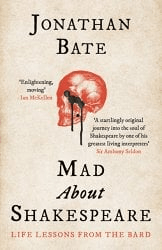
Jonathan Bate is a delightful person. Kind, funny and with the gift that the truly brilliant have. He doesn’t – as some lesser scholars do – make the listener or reader feel stupid in the face of his brilliance, rather he brings everyone along with him. I saw him talk about this book at a bookshop event and most people had a tear in their eye when he described Edward Thomas reading (from Antony and Cleopatra) to his wife, the night before returning to the trenches. It was no less moving and profound on the page.

Bate talks about his amazing education, the close reading insisted upon by good teachers, and the confidence which grew in the class. As a teenager, Bate spent hours roaming the nearby grounds of Knole, one of the great British houses, and his love of history and landscape flows from the page. As you’d expect though, this is mostly about Shakespeare. I was thrilled to know some of my favourite productions were also his, and he’s very clear-eyed about actors and directors. He brings us unsparingly into the most painful times in his life and shows us how words can heal, sustain and inspire.

After being immersed in this I thought my reading troubles were over, but no, it wasn’t so. I was making a slow recovery from monkey brain, only to be struck down with a nasty dose of booksteria. You’ve never had it? You are lucky, but also missing out. Booksteria is that feeling you get when you survey the books you have – charity shop buys, gifts, library books and all the stuff you’ve just accumulated – and can’t decide which one to read next. I held my hands over them like a water-diviner, hoping the fountain of inspiration would make itself known. I picked them up. I put them down.

I got through the preface to a biography, then promptly lost all interest in the subject.

I started a novel, then a nature book. I spoke to the books. They didn’t reply.

Books, books everywhere, and nothing to read.

Finally, I opened this book and found it is made of many individual paragraphs, some just a few sentences long. That could work, I thought. If I couldn’t read a whole book, I could at least manage a paragraph. And what paragraphs! Each one so complete, so satisfying. Each one a cell, containing all the DNA of the novel. The story unfolds in moments, like life. The central character struggles and – as we know – worse is to come. The novel is set in 2016, in New York. There’s sadness, melancholy, love and anxiety. The central character is a librarian and she knows where the truth is shelved. All I could register was that I was reading, reading, reading, and eventually, having read.

April

Libraries use the Dewey Decimal System or the Library of Congress method of categorising (and therefore shelving) books. Bookshops are a little more relaxed but generally you know what you’re getting on a shelf marked “Local Interest” or “Literary Fiction.” What about the libraries in our own homes? Things might be colour co-ordinated or alphabetised on the bookshelf, but what about the teetering pile by the bed? And then there are the books you don’t actually own, but which take up space in your mental reading list. This first book is one of those, in my list.

I resisted Don DeLillo for a long time, put off maybe by the fact that at one time everyone I knew was reading him. I thought of DeLillo as a modern-day Hemingway – a bit blokey and macho. I was finally drawn to this in the library by the slightly misconceived idea it was a “campus” novel – one of my favourite things to read. It was a droll surprise. Funny, moving, and very timely. The only unbelievable plot device is that a professor with multiple ex-wives, children and step-children could support a comfortable middle-class lifestyle. I’d recommend it if you are musing on mortality, environmental disaster and the loss of a loved one.

If you know Trevor Noah from his live act or television show you already know this is going to be funny. I wasn’t prepared for how warm, how loving and humane this would be. The towering figure at the centre of the teeming, gritty world is Trevor’s mother. She’s very strict, loving, and vulnerable. Her love for Trevor’s stepfather puts them all in danger. Trevor sticks to his early years, by the end of the book he’s making money and building a career, but we get little detail about that, though he’s unsparing about his own brushes with the law. His early life was a crime (in apartheid-era South Africa) but his current presence is a joyous celebration of much more than survival. He paints a picture of tight communities, children with nothing making something, and through it all, deep love – as a child and a grown man – for his remarkable mother.

Sometimes I pick a book because I’m interested in the central story, or because a character sounds appealing. Sometimes a writer I’ve liked before publishes something new I want to read. I did not pick this book. In fact, I was set against it and it took a stern talking-to by an old friend to show me the error of my ways. The old friend even put the book in the post to me, so I had no excuse. I’m writing here to say old friend was 100% correct and I was wrong to resist this for so long. The device which I’d thought would be tricksy is carried off with simplicity and charm and the story rolls along with laughs and plenty of tears. The central character tries out a number of lives incluidng one which would change the world. The closing chapters tie almost all the strands, leaving enough unsaid to haunt and provoke me for days after. Lots of people (including old friend) talked about the scenes in wartime London, and I’d go further and say this book added to my understanding of women’s lives in the first half of the last century. I’ve discovered there is another novel featuring characters from this book, so I have to thank old friend RR sincerely for intervening.

This image has an empty alt attribute; its file name is 9781473661233.jpg

Akala and his famous sister (Lady Dynamite) look blessed and successful now, but it wasn’t always so. This is a story of poverty and hope. The poverty lies in the expectations of the young Akala and his contemporaries expressed by the state education system. Akala debunks received wisdom, challenges assumptions and demands the reader follow him through knife crime, racist teachers and police, and much more. There’s so much interesting and challenging history here. Slave rebellions in the Caribbean, the role of Cuba in ending apartheid and some quick debunking of blinding obvious cliches. I’m not ashamed to say I was forced to confront my own assumptions and unpick some things I’d taken as facts, when they might be described as conveniences for the ruling class in this country and others. Akala should be angry, but this isn’t an angry book.

This image has an empty alt attribute; its file name is 9781783351732.jpg

What is an emotion? As hard to describe in a blog post as it obviously was in years of scientific research distilled in this book. Why are some emotions – fear, anger, disgust – instant and experienced by babies and full-grown humans, while others develop over time and change with age. I discovered that emotions experienced at the time of an event have an impact on the way memories are created and stored. This is the explanation for how you can remember in horrific detail a minor humiliation from decades ago, but can’t remember how you drove to the supermarket this morning. The book assumes no scientific knowledge, but you do need to be paying attention to the technical language. It could have been a bit dry, but it was a real tear-jerker because the writer lost a parent (during the pandemic) while he was working on the book. So he had a home laboratory of frequently uncontrollable and inexplicable emotions – his own – which he examines honestly and with compassion. Highly recommend this for a readable guide to a scientific subject, and also a handy guide to recognising and accepting the maelstrom within.

Do you love The Great British Sewing Bee? No? How sad. The BBC show is a delight; charming and gentle, full of colour and texture. The judges are exacting and Esme is one of them. Television likes to convince us that it “discovers” people but Esme points out, with her basilisk judge gaze, that she existed before she was on television. She worked, she loved, she designed, she dressed as she wished, and lived her authentic and defiant life. This is a conventional autobiography of an unconventional woman. She takes us with good humour and honesty from a childhood shaped by her father’s heroism to a major part of the London fashion scene in the 1970s. You’ve seen her designs, though you might think you haven’t. If you’re even slightly interested in where having a point of view and a taste for adventure can take you, this is one for you.

If you’ve been reading my blog since January you’ll know I’m in a bit of an Ali Smith feeding frenzy. I chose this because it is a follow-up or maybe full stop to her Four Seasons and because it was short. It roves over some familiar territory: pandemic, poverty, misfits, loss, love. It moves with the same momentum as those longer novels and you have to just gulp it down. Very moving, faintly optimistic.

Last year I read The Book of Delights by Ross Gay which I adored. Images from the lush gardens of that book still dance in my mind. The idea of delight is what appealed to me. “Delightful” is a word I already overuse, along with “vexing” and “tiresome.” I’m aware I’m sounding like a Wodehouseian Dowager (and why not?) but the idea of finding things delightful (rather than awesome, or unbelievable) is surely more useful? Gay’s book, like Priestley’s before it, reminds us that delight can be found everywhere. The delight lies in the noticing, not in the creation of a special moment, a memorable occasion. Priestley’s essays cover everything from Tobacco to Shakespeare – he’s obviously very funny on the subject of actors and theatre – and all expressed in his good plain prose (the subject of an essay itself.) Essay 39 will find you out if you are one of Tolstoy’s happy families. Essay 3 begins “reading detective novels in bed…” how can you not share his delight at that? He’s not sweet, though, or twee. He sets his current delights against past discomforts and he can be pleasantly waspish. From a good night’s sleep to a hot bath, a tinkling fountain and a walk in nature, Priestley’s delights – like his writing – are simple and universal.

I end my April reading with this from Essay 93: “We complain and complain but we have seen the blossom – apple, pear, cherry, plum, almond blossom – in the sun; and the best among us cannot pretend they deserve – or could contrive – anything better.”

March on

I’d sworn off big books for a while, but I had this on order at the library, and when the library calls, you must answer. I’ve read pretty much everything by this author, and although nothing has quite reached the heights of The Poisonwood Bible I’d never let a book by Kingsolver pass me by. This was a hefty and beautiful object with a haunting design printed on what I now know is called the fore edge. It is loosely based on David Copperfield and you can find a couple of instances online of Kingsolver talking about her nights in Dickens’ house. Quite spine-tingling stuff.

This is a long read and not so much a novel as an immersive experience. I discovered so much about that part of America (Virginia) and the people who live there. The elements of David Copperfield fit well into this modern story and at times it was only knowing how things end for David that kept me going with Demon, so bleak and hard was the journey. It was full of detail, rich in atmosphere and almost sensual in the details of poverty in a rural landscape. Demon is a fine narrator of his history: you want to know him, you want to love him. At times he reminds us he’s now an adult looking back and that’s a distancing device that makes it bearable to go on reading. I wonder if I’ll read anything more remarkable and memorable this year?

This year I’m reading more mindfully to counter the many threats to my attention. This book was a challenge and a balm. Hari describes the serious problem we’re facing. He starts with the choices we make as individuals, to which there are individual solutions. We can control and confine our internet use. We can become aware of when we’re being used and manipulated (angry words excite the algorithm.). We can use our laptops without the internet and even lock our phones in portable safes and set the time for release. Beyond the individual though, there’s a mass of evidence that we’re all losing focus, at a time when we need to work together to solve the most pressing problems. Hari suggests it is a dreadful recipe at work. Stress, sleeplessness, poor nutrition, pollution and poverty are all working together to make us “cognitively degraded.”

I certainly learned a lot and will apply much of the advice to my own use of devices. And the good news is, we can calm down. We can focus, and what better way than reading?

Anthony Horowitz is a prolific writer of screenplays, books for children, and a couple of series for adults. (You can see his other series brought beautifully to life on BBC at the moment – Magpie Murders.) In this book, like the others in this series, he appears as the central character. I sometimes find the other character, a former policeman called Hawthorne, rather hard to take. He’s rude to Anthony (“Tony”), withholding the solution to the crimes and withholding his own story too. He’s maddeningly good though. This novel takes the meta to a new level as Anthony writes a play and a critic gets murdered. Of course, the writer is the main suspect. Horowitz is so, so good at this. His plots are dense but not heavy, his characters utterly believable and he plays so deftly with the conceit of the novelist as character. There are in-jokes – mostly at Michael Morpurgo’s expense in this novel – and even the acknowledgments are in character. Don’t hesitate to find a grown-up Horowitz if you haven’t read them yet, and it is worth getting them in the right order.

You’ll know Katie Wix, even if you think you don’t. She’s a writer and comic and has appeared in many top tv shows over the last ten years. I thought this was a memoir with cake as the organising structure. Not quite. There is cake, but there’s no sweetness. There is confection, but not much lightness. That’s not to say it was a difficult or unpleasant read – Wix has the gift of observation which the best comics share. She captures the feeling of the most difficult days in her/our lives with cool clarity. She’s not concerned with protecting herself and she lays bare the terrible pain she carries, or carried at the times in her life described in this book. It is incredibly moving. I wanted to know more about her tv career and her many victories and successes but that would be a different book.

It was rash to consider Demon Copperhead the book of the year, or even the month, when I had this waiting in my library pile. I don’t know why I chose it, particularly when I’m trying to read shorter novels and this was over 600 pages. But it took root from the first pages and hasn’t left, even now. Like Kingsolver’s book, it was an eye-opener and a challenge to what I thought I knew. It is about trees, and the way we need them and they need us. At least one of the main characters is based on a real person – possibly more than one but I didn’t search. The structure of the first section bothered me at first and I considered stopping. That proved impossible. The separate stories of individuals were so full of detail they felt biographical and microscopic. Then the story widens out, the characters from the first section move out into their worlds before they are drawn back together, by trees. I hope that doesn’t sound simplistic, it really is a remarkable and complex book that is still easy to read, passionate, and moving. It will change the way you look at trees, and the world they make for us.

What I Read in Feb

Most of the month was taken up with this whopper and I have to admit I was glad when it was done. February is a short month, but filled mostly with this book, and a couple of other delights.

I wanted to find out how this reserved and private man managed to assemble and lead the most radical government in British history. Clement Attlee grew up wealthy, privileged, and well-educated. He should have been a natural Conservative. His family lived in comfort, sure of their place in the world. They had one other important characteristic and this is what shaped Citizen Clem. They believed that those who had, should support those who had not. The whole family lived lives of quiet service to others. Clement moved to Stepney to live among the people he helped – some of the very poorest in Britain. He served in WWI, was injured several times. and the time he spent with ordinary men helped refine his political ideas.

He was a quiet man. He read and wrote poetry. He was a hard worker and it was easy to underestimate him. Churchill certainly did in the General Election of 1945 which Labour won resoundingly.

One of the things I found most fascinating about this book is the way politics seemed to be a very real part of people’s lives at that point in history. People bought hundreds of thousands of copies of the political writings of the day; manifestos, publications like the Beveridge Report. The author puts much of the credit for the Labour victory with the servicemen still abroad who wanted to return to a better life – and who remembered, perhaps, what happened to improve the lives of those returning in 1918 – nothing.

The massive book was very enjoyable to read. Full of wry humour and scholarship but also with a strong sense of the person. A famous autobiography was being dissected in public at the time I was reading. In a world of frost-bitten genitals it is refreshing to be taken back to a time when the privates were private and the source material is long, erudite letters and properly minuted meetings. I didn’t find out as much as I wanted about the creation of the NHS. Perhaps because (news to me) Attlee didn’t get on well with the architect of the scheme, Aneurin Bevan. I discovered much more. Attlee worked tirelessly for the very poorest in Britain, but he never lost sight of the bigger picture. The UN, and the slow melting of the British Empire and the growth of the Commonwealth owe much to Attlee’s ideas, ideals and vision. When he was asked what he’d most be remembered for, he replied “India.”

I ended the book feeling I understood Attlee much better and also the era and in particular the drive and world-view of a particular group of people. In Attlee’s first Cabinet there were more ex-miners than Old Etonians. The quiet man enabled a quiet revolution that gave us the safety net of state support and healthcare free at the point of delivery. Let’s hear from one of his oldest friends, and reflect how far we’ve fallen:

“…he is a tiger for work. Incessant work. Labour from early morning to late at night. There are men more clever but none more selflessly devoted to his task. There are men more eloquent, but none who command more complete confidence in his integrity.” (Jack Lawson)

Inspired by January’s entry from Emma Smith I ordered this one from the library. The title comes from Stephen King’s description of books and if you share his view you’ll really enjoy this. Chapters on separate topics mean you can jump about through it and explore your own relationship with books. Smith ranges wide and she’s passionate about books, sharing your (and my) affection, irritation, fear, and nostalgia. From the first European printing to book-burning and books as objects of worship, Smith challenges what you thought you knew and uncovers what you’ve hardly thought. Very readable.

I ended the month with a lovely warm bath of nostalgia. This is beautifully written, factual yet bowling along like a thriller. You know the characters, or rather the actors who played the characters, but you’ll be surprised by much of the history. The book starts where the show started, with the writers. It is important to remember how much of what we love on television is just the tip of an iceberg of effort, rejection, and disappointment. It takes talent, yes, but a big dose of luck is needed to turn strivers into household names. The writer is honest about the way modern audiences view this blast from the past, but she’s able to acknowledge how important television was, when it was all we had in our homes. Those moments talking to friends and colleagues about the new show were beautifully captured. The feeling of knowing there was something on that night – so different from nowadays when all the choice can sometimes feel like a huge pile of nothing. A charming book.

How many weeks?

(what I read in January part 2)

There is a benefit to the month that seems to go on for at least six weeks. Lots more time to read. Dark evenings and wet fields keep this walker indoors and there’s still a hint of resolution in the air.

I continued my January reading with this absolute page-turner. There’s something so restful, isn’t there, about a book that just takes over? Remain awake and keep your eyes on the page and that’s all the effort you need to expend. That’s not to say it was all plain sailing. This was a very moving story of loss and courage all wrapped up in a strong plot with a cloying atmosphere. Unlike those mystery novels where the corpse is little more than a prop, this lost person remained central to the story and the lives of those left behind.

I read Exit by this writer last year and I’ll look for more when the reading list needs leavening.

No hint of Winnie the Pooh or Christopher Robin in this classic Golden Age mystery. Or is there? The hero needs a sidekick who in turn needs tasks and errands, but whose main function is to have crucial plot points explained to his doughty, decent, willing face. Full of great period detail and finely drawn characters. Or did people just look more interesting then? If you like Golden Age and Country House mystery, you’ll enjoy it.

If I hadn’t recorded this in my “list of books I’ve read” notebook I would have forgotten it. I’m not saying it wasn’t a good read. It was funny and very poignant, tear-jerking in fact. Very insightful about friend groups, especially when a friend engages in a complicated life and dies suddenly. In that way, I’d describe it as a very grown-up book. Very clear-eyed and unsentimental. All the softness and love in the book is focussed on a massive dog. Maybe you need to be a dog person?

This was a Christmas present. From me. I borrowed it back once the recipient had read it (I’ve returned it, I’m not a monster.) A great idea by someone in the marketing department of the publisher and a good counterpoint to the new Poirot novels by Sophie Hannah. Marple lends herself to a short story because as soon as she’s worked out which of her neighbours has already behaved like the criminal, she’s done. Jane travels far from St Mary Mead, and it is great fun to see her in New York, on a cruise and in more familiar settings. These vary from excellent to meh but overall they form a delightful confection

Quite coincidentally I ended the month as I started it, with a bright pink cover. This 1930 novel was a highlight of the month’s reading. The heroine (one of the generation of “spare” women between the wars) sees the door to freedom opening for a moment and runs through. Escaping a life of genteel drudgery she finds a new way of living. The scene where – having moved from London – she drags her mattress out into the orchard to lie down under an apple tree is wonderful. Life isn’t easy or fair for her and she is drawn back to her old life. The novel is really a story of misunderstanding, people misreading each other and misspeaking. For someone, the consequences are deadly. Highly recommend it for a charming read with a heroine you’d want to help.

What I read in (half of ) January

Started the year with a blast of pink. Yes, I did judge this book by the cover – that’s the point. I was taken aback when the very young woman on the counter raved about the book. She used words like “strange” and “disturbing.” I pressed on.

Honestly, I think I started this just before January, in those fuzzy unfocused days when the light fails early and there’s little sense of purpose. I was conscious quite early on that I hated it. I didn’t like any of the characters, so I didn’t care what happened to them. Campus novels are a favourite of mine so there was that to like, but I was aware of not exactly enjoying it. What’s this though? Who was racing back from errands and visits to read another chapter? Who was turning the pages faster and faster as the drama built? And who watched the doorway in terror, turning round fast when standing at the sink because surely, there was a footstep behind me? That’s it then, a not-enjoyable, unputdownable thrill with a tooth-achingly sweet cover.

I read Ali Smith’s Winter and Summer in January. I started the foursome late last year, so I read them in close order, which I’d recommend. I don’t know why I delayed so long after publication – the whole point of the exercise was speed – but I usually ignore big hits at the time and return to them when the hype has died down. I thought, also, that I didn’t like Smith’s style, despite having read a few of her earlier novels. Once you start these, there’s nothing to do but surrender. Reading them is like falling, and the style moves you forward, ever forward, despite the aching sadnesses of the stories. Modern Britain is exposed like a collapsing house: Brexit, asylum seekers, poverty, protest, and a suffering environment. There’s also love and family and hope. Summer contains resolutions, of sorts, but the comfort lies in the reading, not the story.

While reading this I was aware of the creaking and groaning of my brain as it shifted, expanded and was altered forever. It drove me to find more on the topic – reading more on this subject soon – and it challenged and changed me. The writing is careful and thoughtful and there’s a sense of Sanghera’s own journey toward clarity. Highly recommend this book for a life-changing read.

Leonard and Hungry Paul by this writer was a knockout hit of lockdown. The tiny press did no advertising, but people asking booksellers for recommendations were invariably handed the bright yellow paperback. I bought mine in Mr B’s Emporium in Bath and it hit the spot. I was keen to read the follow-up and it didn’t let me down. It doesn’t have the romantic warmth of Leonard, with an older lead character and a drawing-in of night lurking in the pages. Melancholy and funny, Panenka is a charming man with terrible secrets in his past and his future. The writing is detailed and careful, sad and delightful.

The First Folio is a secular bible, a book that means more than it says. For Shakespeare lovers it is special for very precise reasons, but the general reader will learn a lot from the way the copies circled the world. Some remained in grand libraries until funds were needed, and some served as repositories of key family dates and textual opinions. At least one stored a slice of greasy bread for decades and some display wine stains and children’s scribbles. They were household objects before they became mega-bucks artefacts. The copies which survive are known by their owners’ names even though most now lodge in air-conditioned institutions in Japan and US. Smith creates a rollicking read which was fascinating, fun and challenging.

That’s my reading for the first half of January – looks as though my plan to read more meaningfully and widely is paying off, but can I sustain it? We’ll see.